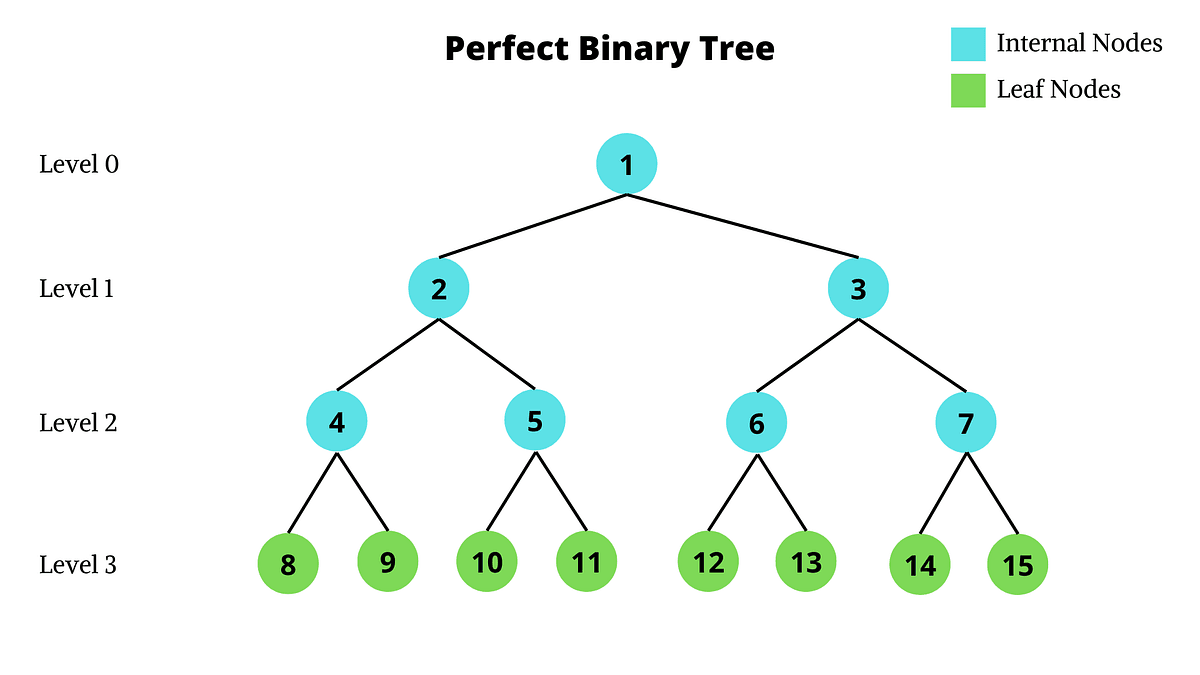

Welcome to the World of Binary Trees
Imagine you have a family photo album. Each page shows a parent and at most two children. That picture is a perfect analogy for a binary tree. In computer science a binary tree is a data structure where each node can have up to two links – called the left and right child.
Why do we care? Binary trees are the backbone of many everyday tools: search engines, file systems, game AI, and even the way your phone organizes contacts. Understanding them opens the door to faster code and smarter apps.
Building a Simple Binary Tree
Let’s start with a tiny example in Python. The code below creates a node class and links three nodes together to form a tiny tree.
class Node:
    def __init__(self, value):
        self.value = value
        self.left = None
        self.right = None

# create nodes
root = Node(10)
root.left = Node(5)
root.right = Node(15)
Here root holds the value 10. Its left child holds 5, and its right child holds 15. This is the simplest binary tree you can draw – a single root with two leaves.
In real projects you often build trees dynamically, inserting nodes one by one based on some rule (like keeping the tree sorted). The rule decides whether a new value goes left or right.
Why Traversal Matters
Once a tree is built, the next step is to "walk" through it. Walking is called traversal. Think of it like reading a book: you can start at the beginning, jump to the middle, or read page by page. Different traversal orders give you different perspectives on the data.
There are three classic depth‑first traversals and one breadth‑first traversal. Let’s meet them one by one.
Depth‑First Traversals
Depth‑first means we go as deep as possible before back‑tracking. The three flavors differ in the order we visit the current node relative to its children.
1. Pre‑order (Node, Left, Right)
We visit the node first, then its left subtree, then its right subtree. It’s great for copying a tree because you see the parent before its children.
def preorder(node):
    if not node:
        return
    print(node.value)
    preorder(node.left)
    preorder(node.right)
2. In‑order (Left, Node, Right)
We visit the left side, then the node, then the right side. If the tree is a binary search tree (BST), this traversal prints the values in sorted order – a handy trick!
def inorder(node):
    if not node:
        return
    inorder(node.left)
    print(node.value)
    inorder(node.right)
3. Post‑order (Left, Right, Node)
We finish both sub‑trees before visiting the node itself. This is useful for deleting a tree because you free the children before the parent.
def postorder(node):
    if not node:
        return
    postorder(node.left)
    postorder(node.right)
    print(node.value)
Breadth‑First Traversal (Level Order)
Instead of diving deep, we explore the tree level by level – from top to bottom, left to right. Imagine reading a family tree generation by generation.
We usually implement this with a queue (first‑in‑first‑out list). Here’s a quick Python snippet:
from collections import deque

def level_order(root):
    if not root:
        return
    q = deque([root])
    while q:
        node = q.popleft()
        print(node.value)
        if node.left:
            q.append(node.left)
        if node.right:
            q.append(node.right)
Real‑World Scenarios
Search engines use a special kind of binary tree called a binary search tree (or its balanced cousins, AVL or Red‑Black trees) to store indexed words. In‑order traversal quickly gives a list of words in alphabetical order.
Game AI often builds decision trees where each node asks a yes/no question. Traversing the tree in pre‑order can generate a readable set of rules for designers.
Expression evaluation (like calculators) uses post‑order traversal. When you convert an arithmetic expression to a tree, visiting nodes post‑order gives you Reverse Polish Notation, which is easy for computers to evaluate.
Tips for Working with Binary Trees
- Start small. Write a function that inserts a single node. Test with three nodes before tackling large trees.
- Visualize. Draw the tree on paper. Seeing left/right relations helps avoid off‑by‑one bugs.
- Use recursion wisely. Recursive traversal code is short and clear, but for very deep trees it can hit recursion limits. An iterative stack version solves that.
- Balance matters. A perfectly balanced tree has height log₂(n). If your tree becomes a long chain (like a linked list), operations degrade to O(n). Consider self‑balancing trees for production code.
- Practice. Implement all four traversals from scratch. Then try swapping them – for example, use in‑order to sort an array.
Actionable Takeaways
- Write a
Nodeclass in your favorite language. - Implement the four traversal functions (pre, in, post, level).
- Create a small binary search tree and run an in‑order traversal to see sorted output.
- Experiment: change the insertion rule to create an unbalanced tree and notice the performance difference.
- When you need to delete a whole tree, use post‑order traversal to free memory safely.
Wrapping Up
Binary trees may sound intimidating, but at their core they are just nodes with left and right links. Traversal is simply a systematic way to visit each node. By mastering pre‑order, in‑order, post‑order, and level‑order, you gain a powerful toolbox for many programming challenges.
Take the time to code these traversals yourself. Play with examples, draw pictures, and watch how the same data can be read in four different ways. Soon, binary trees will feel as natural as a shopping list, and you’ll be ready to apply them in search, AI, and beyond.
Related Articles
- Web Development Made Simple: Build Your First Site in a Day
Learn the basics of web development with clear steps, real examples, and handy tips. No jargon, just fun and easy-to-follow guidance. - Kick‑Start Your First Mobile App: Simple Steps for Everyone
Learn how to turn a cool idea into a real iOS or Android app. No jargon, just clear steps, fun tips, and code you can copy! - Microservices Made Simple: Build Flexible, Scalable Apps
Discover why micro‑services are the secret sauce for modern apps and how to start using them today.