
Meet the Silent Heroes of Node.js
Imagine you're hosting a huge party with hundreds of guests. You're the only host, but miraculously, everyone gets attention. How? You're using an invisible helper who:
- Takes requests instantly ("More snacks at table 5!")
- Delegates tasks to helpers ("Chef, prepare those nachos!")
- Comes back when things are ready ("Nachos delivered!")
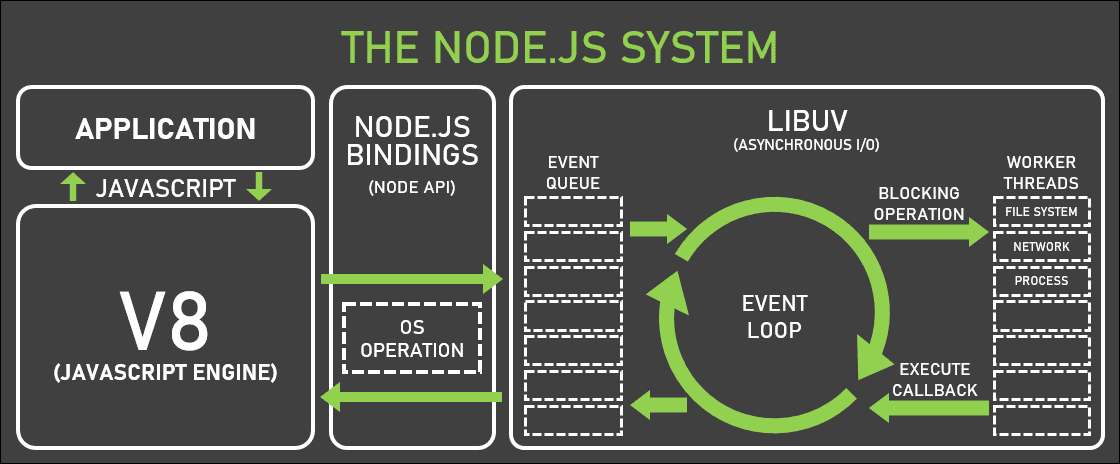
This invisible helper is Node.js's Event Loop and Libuv working together! Let's see how this dynamic duo powers your apps.
The Event Loop: Node.js's Traffic Cop
The event loop is Node.js's task manager. It constantly checks:
- Is there new JavaScript to run? (Like your app code)
- Are any pending tasks completed? (Like file reads or API calls)
// Simple example of async operation
console.log('Order 1: Take order')

setTimeout(() => {
  console.log('Order 4: Serve coffee (ready after 2 sec)')
}, 2000)

console.log('Order 2: Start coffee machine')
console.log('Order 3: Prepare sandwiches')
Output order:
- Take order
- Start coffee machine
- Prepare sandwiches
- Serve coffee (after delay)
Libuv: The Powerhouse Behind the Scenes
Libuv is Node.js's multi-tasking superhero. It handles the heavy lifting:
- File operations
- Network requests
- Timer management
- OS interactions
Here's how it works with our coffee shop analogy:
// Libuv handling multiple orders
const makeCoffee = (orderId) => {
  setTimeout(() => {
    console.log(`Coffee ${orderId} ready!`)
  }, Math.random() * 2000)
}

makeCoffee(1) // Order 1 starts
makeCoffee(2) // Immediately starts order 2
makeCoffee(3) // And order 3 keeps coming!
Don't Block the Party! Common Pitfalls
While the event loop is powerful, you can accidentally ruin the party:
// Blocking operation example (DON'T DO THIS!)
console.time('blocking')
let count = 0
for(let i=0; i<100_000_000_000; i++) {
  count++  // Freezes everything while counting!
}
console.timeEnd('blocking')
Instead, use asynchronous patterns:
// Non-blocking file read
const fs = require('fs')

fs.readFile('big-file.txt', (err, data) => {
  console.log('File ready!') // Called when done
})

console.log('I can do other things while waiting!')
Pro Tips for Event Loop Mastery
- Offload heavy tasks: Use worker threads for CPU-heavy operations
- Queue wisely: Use setImmediate() for next tick operations
- Monitor performance: Use --trace-event-loop-statics flag
- Promises over callbacks: Cleaner async/await syntax
Key Takeaways
- Node.js uses single-threaded event looping
- Libuv handles I/O operations asynchronously
- Never block the main thread with long operations
- Understanding this system helps you write faster, more efficient code
Now go build some amazingly performant Node.js apps! 🚀
Related Articles
- Async/Await: Say Goodbye to Callback Chaos!
Tired of messy callbacks? Learn how async/await can make your code cleaner and easier to handle asynchronous tasks. - Node.js Speed Boost: Make Your App Fly!
Node.js apps feeling slow? Don't worry! This guide will help you identify bottlenecks and optimize your code for lightning-fast performance. Let's make your app a speed demon! - Node.js Streams & Buffers: No More Waiting Around!
Learn how streams and buffers make Node.js apps fast and efficient. Handle large data like a pro without crashing your server!